Attacking the Paulsen Sicilian
1.e4 c5 2.Nf3 e6 3.d4 cxd4 4.Nxd4 a6 5.Bd3
The Paulsen Sicilian (with ...e6 and ...a6) is the great shapeshifter — flexible, resilient, and frustrating to attack head-on. This course meets it with the 5.Bd3 system: a schematic, understanding-based setup that secures White a stable edge without chasing the hydra through endless move orders.
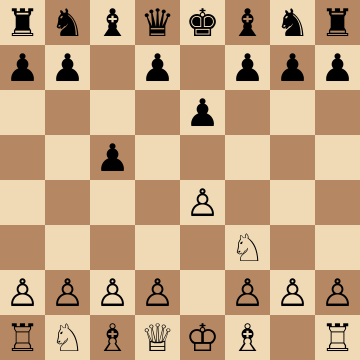
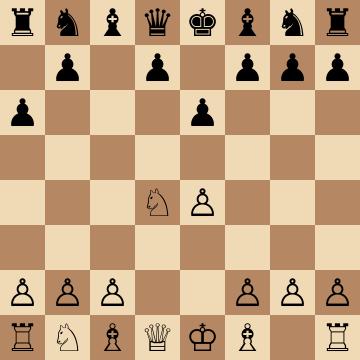
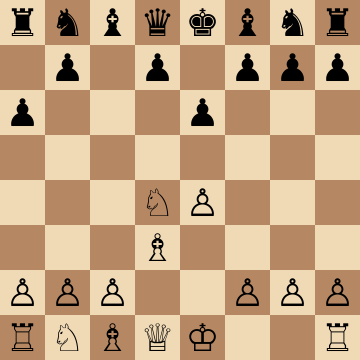
Mainline
1.e4 c5 2.Nf3 e6 3.d4 cxd4 4.Nxd4 a6 5.Bd3 Nf6 6.O-O Qc7 7.Qe2
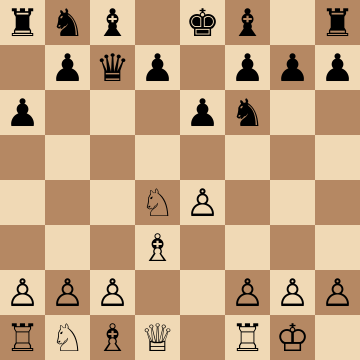
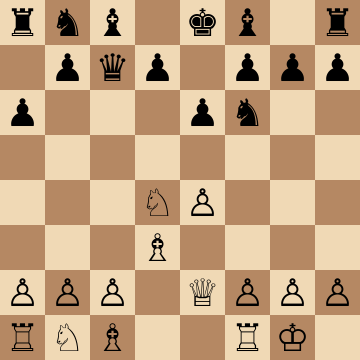
Kan Sicilian: 5.Bd3 Main Line
1.e4 c5 2.Nf3 e6 3.d4 cxd4 4.Nxd4 a6 5.Bd3 Nf6 6.O-O Qc7 7.Qe2
The most natural White setup against the Kan. The bishop on d3 supports e4 and eyes h7, and White completes development before committing the c-pawn. Black builds the standard hedgehog-flavoured structure with ...Qc7, ...b5 and ...Bb7, and the game turns on whether the e5 or d5 break lands first.
Kan Sicilian: Maróczy Bind (5.c4)
1.e4 c5 2.Nf3 e6 3.d4 cxd4 4.Nxd4 a6 5.c4 Nf6 6.Nc3 Bb4 7.Bd3
White clamps down on d5 and takes away Black's main freeing break. The bind is the critical positional test of the whole Kan: Black must generate play with ...Bb4, pressure on c3 and the ...d5 or ...b5 lever, or slowly suffocate. Understanding this structure is worth more than any amount of memorised theory.
Kan Sicilian: 5.Nc3 Taimanov Transposition
1.e4 c5 2.Nf3 e6 3.d4 cxd4 4.Nxd4 a6 5.Nc3 Qc7 6.Bd3 Nf6 7.O-O
With ...Qc7 the game blurs into Taimanov territory, and knowing which structure you are in decides which plan applies. White's setup with Bd3, O-O and f4 is standard; Black chooses between ...Bb4 pressure and the slower ...b5, ...Bb7 and ...d6 hedgehog.
Study the Beat the Taimanov Sicilian course
Kan Sicilian: 5...Bc5 Counter-Attack
1.e4 c5 2.Nf3 e6 3.d4 cxd4 4.Nxd4 a6 5.Bd3 Bc5 6.Nb3 Ba7 7.Qe2
Black develops the bishop actively before White can play c4, and after Nb3 it tucks into a7 where it stares down the a7-g1 diagonal for the rest of the game. This is the most combative Kan treatment and it produces genuinely double-edged positions rather than the slow manoeuvring most players expect.
Kan Sicilian: 5.g3 Fianchetto Setup
1.e4 c5 2.Nf3 e6 3.d4 cxd4 4.Nxd4 a6 5.g3 Qc7 6.Bg2 Nf6 7.O-O
A quiet, very modern try. White fianchettoes to control d5 and e4 with pieces instead of pawns, avoiding all the sharp lines where Black's ...b5 counts for something. The game becomes a slow squeeze, and Black's usual pawn-storm counterplay simply has nothing to attack.
Kan Sicilian: ...b5 Queenside Expansion
1.e4 c5 2.Nf3 e6 3.d4 cxd4 4.Nxd4 a6 5.Nc3 b5 6.Bd3 Bb7 7.O-O
The whole point of ...a6 arrives immediately: Black expands and puts the bishop on the long diagonal before developing anything else. White must decide between a4 to stop the expansion, accepting a weak b4-square, or ignoring it and racing with e5 and f4. Both choices define the middlegame completely.
Key ideas
- Develop with 5.Bd3, O-O and c3 or Nc3 — one harmonious scheme against Black's many setups.
- Keep the strong knight on d4 supported, denying Black the usual free Paulsen development.
- Answer ...Bc5 tries with Nb3 and gain time; answer slow play with f4 or e5 space grabs.
- Win with understanding: piece placement and pawn-break timing beat memorized sequences here.
Typical plans and structures
White's setup — Bd3, O-O, Qe2, often c3 with Rd1 or Nc3 with Kh1 and f4 — keeps every structural option open while Black commits first. Typical middlegames feature a space-gaining e5 advance, kingside pressure with f4-f5 against ...d6 setups, or a favorable clamp when Black delays ...d5 too long. The course is built schematically: you learn where each piece belongs against each Black formation, which is precisely how to fight an opening whose identity is flexibility.
Who should play it
Open Sicilian players who want a sound, low-maintenance answer to the Paulsen/Kan complex that rewards positional understanding over rote memory.
Frequently asked questions
What is the difference between the Paulsen and the Taimanov Sicilian?
Both feature an early ...e6; the defining difference is Black's fourth move — the quick ...a6 (Paulsen/Kan) keeps maximum flexibility, while ...Nc6 (Taimanov) commits the knight. The 5.Bd3 system targets the Paulsen move order specifically, where the light-squared bishop's development is White's most useful commitment.
Why is 5.Bd3 a good answer to the Paulsen?
It develops toward the kingside where White's play lives, supports both the e4-pawn and a later e5 advance, and avoids premature commitments — mirroring Black's own flexible strategy while keeping the space advantage. It is a favorite of strong grandmasters for exactly this practicality.
Is the Paulsen dangerous for White?
Its danger is subtle: no early crisis, but a hundred small move-order tricks that punish stereotyped play. A schematic system like this course's — where you understand every piece's purpose — is the reliable antidote, because it cannot be move-order-tricked.
Learn Attacking the Paulsen Sicilian with AI feedback
This page pairs the guide above with an interactive ChessMind AI course: a GM-authored repertoire you study move by move on a real board, then practice against a human-like chess AI opponent with instant feedback and spaced-repetition review, so the key positions actually stick. Start learning, jump straight into practice, or browse all opening courses.
New to a concept? Every term is defined in the chess terms glossary.