Beat the Petroff
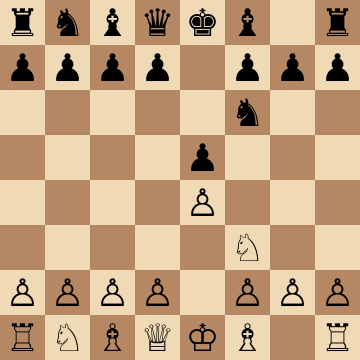
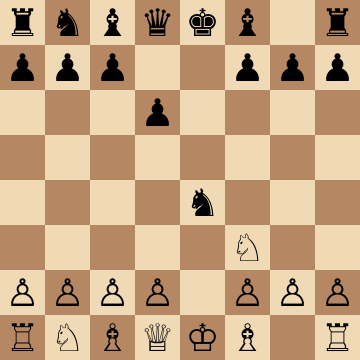
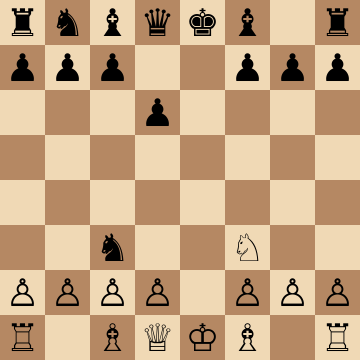
1.e4 e5 2.Nf3 Nf6 3.Nxe5 d6 4.Nf3 Nxe4 5.Nc3 Nxc3
The Petroff Defense is famous for one thing: draining the life out of 1.e4. This course refuses to cooperate — with the aggressive 5.Nc3, White accepts doubled pawns in exchange for rapid development, castles long, and launches a pawn avalanche at the Petroff player's king. Solidity meets storm.
Mainline
1.e4 e5 2.Nf3 Nf6 3.Nxe5 d6 4.Nf3 Nxe4 5.Nc3 Nxc3 6.dxc3 Be7 7.Be3 O-O 8.Qd2 Nd7 9.O-O-O
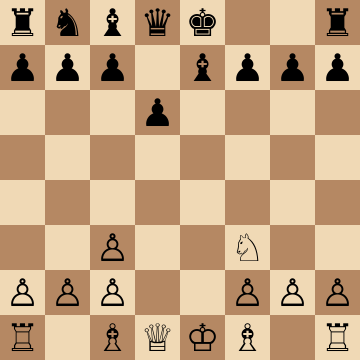
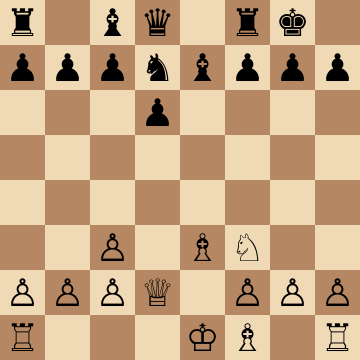
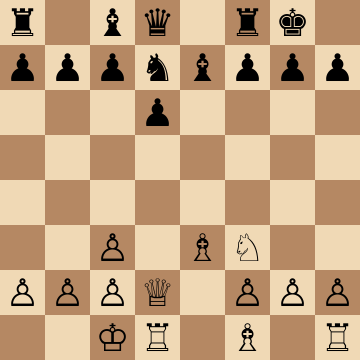
Main Line Pawn Storm: 8...Nd7 9.O-O-O
1.e4 e5 2.Nf3 Nf6 3.Nxe5 d6 4.Nf3 Nxe4 5.Nc3 Nxc3 6.dxc3 Be7 7.Be3 O-O 8.Qd2 Nd7 9.O-O-O Ne5 10.h4 Nxf3 11.gxf3
The heart of the repertoire: opposite-side castling with a ready-made attack. Notice how Black's thematic ...Ne5 trade backfires — 11.gxf3 opens the g-file straight at the castled king, and Rg1, h5 and Bh6 follow like clockwork. The doubled pawns are workers, not weaknesses: they control central squares and open lines for the rooks. Petroff players choose their opening to avoid exactly this kind of game, which is why the system scores so well.
The 5...Nf6 Retreat
1.e4 e5 2.Nf3 Nf6 3.Nxe5 d6 4.Nf3 Nxe4 5.Nc3 Nf6 6.d4 Be7 7.Bd3 O-O 8.h3 Re8 9.O-O
Declining the knight trade with 5...Nf6 dodges the doubled-pawn attack but concedes something else: White keeps a healthy structure, the full center and the more active pieces. Develop naturally — d4, Bd3, h3 to deny g4, castle — and play for Re1, Bf4 and central expansion. There is no forced attack here, just a clean extra measure of space and easier piece play: the slow torture Petroff players hoped to inflict on you, with colors reversed.
Early Queen Trade: 6...Qe7+
1.e4 e5 2.Nf3 Nf6 3.Nxe5 d6 4.Nf3 Nxe4 5.Nc3 Nxc3 6.dxc3 Qe7+ 7.Qe2 Qxe2+ 8.Bxe2
The check on e7 is Black's most direct drawing attempt: trade queens immediately and bet that the doubled c-pawns mean nothing in the endgame. The bet is wrong. After 8.Bxe2 White develops with Be3, O-O-O and Rhe1 while Black still owes several moves, and the half-open d-file plus freer bishops produce persistent pressure without queens. The course walks through the exact endgame plans — this line wins far more often than it draws at club level.
Development with ...Nc6 and ...Be6
1.e4 e5 2.Nf3 Nf6 3.Nxe5 d6 4.Nf3 Nxe4 5.Nc3 Nxc3 6.dxc3 Be7 7.Be3 Nc6 8.Qd2 Be6 9.O-O-O Qd7 10.Kb1
Sensible development from Black, mirroring White's setup — and still the position plays itself for White. The prophylactic 10.Kb1 tucks the king away before committing. From here White chooses between the direct h4-h5 lunge and central pressure with Nd4, eyeing the e6-bishop and the f5-square. If Black castles long to avoid the storm, White still moves first everywhere: the extra tempo and kingside space set the agenda in every structure.
The Classic 3...Nxe4? Trap (4.Qe2)
1.e4 e5 2.Nf3 Nf6 3.Nxe5 Nxe4 4.Qe2 Nf6 5.Nc6+
Every Petroff player is taught to play 3...d6 before recapturing, and this is why. Grabbing immediately with 3...Nxe4? meets 4.Qe2!, and the natural retreat 4...Nf6?? loses the queen on the spot to 5.Nc6+ — a discovered check along the e-file that thousands of players walk into every month. Even Black's best, 4...Qe7 5.Qxe4 d6, leaves White comfortably better after 6.d4. A trap you will keep springing for the rest of your chess life.
Sidestepping the Stafford (3...Nc6)
1.e4 e5 2.Nf3 Nf6 3.Nxe5 Nc6 4.Nxc6 dxc6 5.d3 Bc5 6.Be2 h5 7.h3
Online Petroff move orders often hide the Stafford Gambit, so the repertoire covers it properly. Accept with 4.Nxc6, then defuse every trick with the sober trio d3, Be2 and h3 — the last move takes g4 away from Black's knight, which powers most Stafford cheapos. Refuse all invitations: no early Bg5, no rushing to castle into ...h5-h4. Consolidate, return nothing, and Black is left a clean pawn down with a fading initiative.
Key ideas
- Play 5.Nc3 and recapture with 6.dxc3 — open lines and fast development beat symmetric equality.
- Castle long behind the doubled pawns, which shield your king while the attack rolls.
- Storm the kingside with g4 and h4-h5 — the position plays itself once you know the scheme.
- Deny Petroff players their beloved simplifications: this is a fight, not a handshake.
Typical plans and structures
After 6.dxc3, White's setup is a system: Be3, Qd2, O-O-O, then h4 and g4 with a direct mating attack against Black's short-castled king. The doubled c-pawns are an asset — they open the d-file for the rooks and cover key central squares. Black's safest tries involve early queen trades or delaying ...O-O, and the course gives the accurate continuations that keep an edge even in the simplified positions, so the drawing weapon never achieves its purpose.
Who should play it
Attacking 1.e4 players who currently dread seeing 2...Nf6 and want to turn the Petroff from a drawing offer into a winning attempt.
Frequently asked questions
How do you get winning chances against the Petroff Defense?
By unbalancing the position before the symmetry sets in: 5.Nc3 Nxc3 6.dxc3 creates asymmetric structure and opposite-side castling — the two biggest decisiveness factors in chess. Statistics show these positions produce far more decisive games than the classical main lines.
Aren't the doubled c-pawns a weakness for White?
In this specific structure, no: they reinforce White's central control, the half-open d-file becomes an attacking highway, and endgame concerns rarely matter when the middlegame is a mating race. It is a textbook case of dynamic factors outweighing static ones.
What if Black avoids the main line with 3...d6 4.Nf3 and then deviates?
Black's alternatives — delaying ...Nxe4, or the immediate queen sorties — either transpose or concede White easy development. The course covers the sidelines efficiently, because the whole point of this repertoire is that White's setup stays the same while Black runs out of safe deviations.
Learn Beat the Petroff with AI feedback
This page pairs the guide above with an interactive ChessMind AI course: a GM-authored repertoire you study move by move on a real board, then practice against a human-like chess AI opponent with instant feedback and spaced-repetition review, so the key positions actually stick. Start learning, jump straight into practice, or browse all opening courses.
New to a concept? Every term is defined in the chess terms glossary.