The Moscow Attack
1.e4 c5 2.Nf3 d6 3.Bb5+
The Moscow Attack (1.e4 c5 2.Nf3 d6 3.Bb5+) neutralizes the Najdorf, Dragon and every other 2...d6 Sicilian with a single practical decision. By trading the light-squared bishops early, White defuses Black's most ambitious plans and reaches comfortable, slightly better positions on schedule — hundreds of hours of preparation saved.
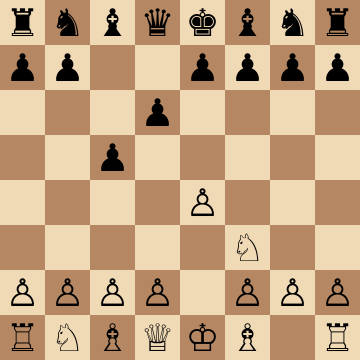
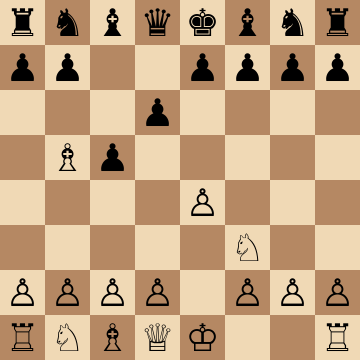
Mainline
1.e4 c5 2.Nf3 d6 3.Bb5+ Bd7 4.Bxd7+ Qxd7 5.O-O Nf6 6.Re1 Nc6 7.c3
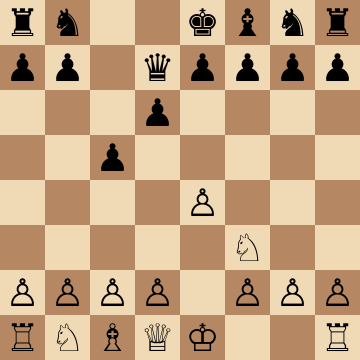
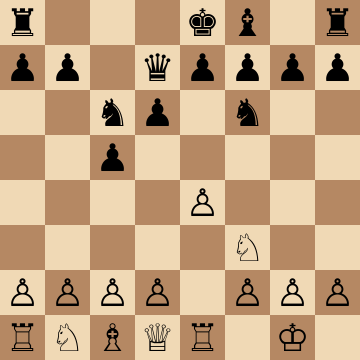
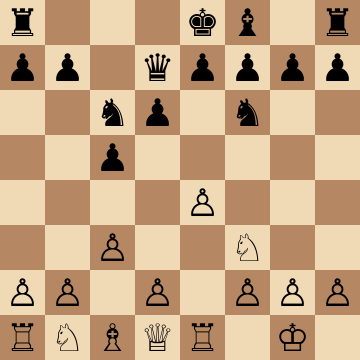
Main Line: 7.c3 and the d4 Center
1.e4 c5 2.Nf3 d6 3.Bb5+ Bd7 4.Bxd7+ Qxd7 5.O-O Nf6 6.Re1 Nc6 7.c3 e6 8.d4 cxd4 9.cxd4 d5 10.e5 Ne4
The backbone of the course: with the light-squared bishops traded, White builds the full center with c3 and d4 under ideal circumstances. When Black counters with ...d5, the advance 10.e5 gains space in a French-style structure where Black's usual problem piece is gone — but so is his best defender of the light squares. White plays Nbd2, Bf4-style regrouping and a slow kingside expansion Black can only watch.
Maroczy Bind Setup with 5.c4
1.e4 c5 2.Nf3 d6 3.Bb5+ Bd7 4.Bxd7+ Qxd7 5.c4 Nc6 6.Nc3 Nf6 7.d4 cxd4 8.Nxd4 g6 9.f3 Bg7 10.Be3 O-O 11.Qd2
Instead of c3, White can clamp the position with 5.c4 and reach a Maroczy Bind where the exchange of light-squared bishops clearly favors White — Black's standard Maroczy freeing ideas involve that very bishop. The scheme is automatic: f3, Be3, Qd2, long or short castling, and endless pressure against d6 and the d5-square. Black gets no counterplay, which is precisely the point of the Moscow move order.
3...Nd7 Variation
1.e4 c5 2.Nf3 d6 3.Bb5+ Nd7 4.d4 cxd4 5.Qxd4 a6 6.Bxd7+ Bxd7 7.c4 e5 8.Qd3
Blocking with the knight keeps more pieces on and is the choice of Najdorf players trying to preserve winning chances. White responds with the cleanest equity: 4.d4 and 5.Qxd4, inviting 5...a6, then trades on d7 and clamps with 7.c4. After ...e5 the d5-square belongs to White forever — Nc3-d5, O-O and a4-a5 follow. Black's bishop pair looks nice but never finds open diagonals in this structure.
3...Nc6 Variation (Rossolimo Hybrid)
1.e4 c5 2.Nf3 d6 3.Bb5+ Nc6 4.O-O Bd7 5.Re1 Nf6 6.c3 a6 7.Bxc6 Bxc6 8.d4 cxd4 9.cxd4
With 3...Nc6 Black steers toward Rossolimo territory, and White borrows the classic recipe: castle, Re1, c3, and exchange on c6 the moment ...a6 asks the question. The big center after 8.d4 is comfortably stable, and there is a trap to know — 9...Nxe4? runs into 10.d5!, when the c6 bishop and e4 knight cannot both be saved. Otherwise White develops with Nc3 and h3 and enjoys the space edge risk-free.
Study the The Rossolimo course
4...Nxd7 Recapture
1.e4 c5 2.Nf3 d6 3.Bb5+ Bd7 4.Bxd7+ Nxd7 5.O-O Ngf6 6.Qe2 e6 7.b3 Be7 8.Bb2 O-O 9.c4
Recapturing with the knight keeps the queen flexible and aims for ...e6 and ...Be7 solidity. White's most instructive setup is Qe2 with b3 and Bb2: the fianchettoed bishop bears down on the long diagonal, c4 fixes the space advantage, and rooks come to d1 to pressure d6. There are no forcing lines to memorize here — just a clean structural plus and middlegame plans Black finds unpleasant to face.
Key ideas
- Check on b5 and trade bishops — Black's dream Sicilian setups die before they are born.
- Choose your structure: c3 and d4 for a big center, or the Maroczy c4 clamp against ...g6 setups.
- Keep a risk-free pull: without light-squared bishops, Black's typical counterplay lacks its main piece.
- Stay flexible — the same setup handles the Najdorf, Dragon and Classical move orders alike.
Typical plans and structures
After the trade on d7, White plays c3 and d4 (or first Re1 and h3), claiming the center under ideal circumstances, or clamps with c4 into a favorable Maroczy structure. The middlegame themes are space, the d5-square, and gentle pressure against d6 — positions where White cannot really be worse and Black must create something from nothing. The course covers the 3...Bd7 main line plus the more combative 3...Nd7 and 3...Nc6, each with a clear scheme.
Who should play it
Practical 1.e4 players who face 2...d6 Sicilians constantly and want a sound, low-maintenance weapon that trades theory burden for lasting comfort.
Frequently asked questions
Is the Moscow Attack as good as the Open Sicilian?
Engines rate both close to equal-with-pull for White; the difference is investment. The Open Sicilian demands mastery of the Najdorf, Dragon and friends — thousands of theory pages. The Moscow gets a comparable practical edge with a few well-understood schemes.
Why does trading light-squared bishops hurt the Sicilian?
Black's counterplay in 2...d6 Sicilians leans on that bishop — supporting ...b5-b4 expansion, controlling key light squares, defending the king after ...g6. Without it, Black's standard plans lose their bite while White's central strategy proceeds untouched.
What if Black blocks the check with 3...Nd7 or 3...Nc6?
3...Nd7 keeps bishops on but delays development — White responds with d4 or the flexible O-O and c3, often gaining time on the awkward knight. Against 3...Nc6 the game transposes toward Rossolimo territory. The course pairs naturally with the Rossolimo for a complete 3.Bb5 arsenal.
Learn the Moscow Attack with AI feedback
This page pairs the guide above with an interactive ChessMind AI course: a GM-authored repertoire you study move by move on a real board, then practice against a human-like chess AI opponent with instant feedback and spaced-repetition review, so the key positions actually stick. Start learning, jump straight into practice, or browse all opening courses.
New to a concept? Every term is defined in the chess terms glossary.